Popular Posts
-
http://en.wikipedia.org/wiki/Avalokitesvara Avalokiteśvara ( Sanskrit : अवलोकितेश्वर lit. "Lord who looks down") is a bodhisa...
-
http://www.360doc.com/content/10/0701/22/1718660_36351156.shtml 《道德经》 《老子》第一章 道、可道,非常道。名可名,非常名。无名,天地之始;有名万物之母;故恒无欲,以观其妙;恒有欲,以观...
-
Namas triya-dhvikānām sarva tathāgatānām. Oṃ, bhuvi bhavana vare vācāle vācāṭai. Curu curu, dhara dhara, sarva tathāga...
-
The mudra [hand postures] are as follows: 臨 (Rin): Hands together, fingers interlocked. The index (sometimes middle) fingers are raised an...


Saturday, November 13, 2010


Thursday, November 11, 2010
Sunday, November 7, 2010

Thursday, November 4, 2010




Monday, November 1, 2010
Psychokinesis or Telekinesis ... pro & con ...
The term psychokinesis (from the Greek ψυχή, "psyche", meaning mind, soul, heart, or breath; and κίνησις, "kinesis", meaning motion, movement; literally "mind-movement"),[1][2] also referred to as telekinesis[3] (Greek τῆλε + κίνησις, literally "distant-movement") with respect to strictly describing movement of matter, sometimes abbreviated PK and TK respectively, is a term coined by publisher Henry Holt[4] to refer to the direct influence of mind on a physical system that cannot be entirely accounted for by the mediation of any known physical energy.[5] Examples of psychokinesis could include distorting or moving an object,[6] and influencing the output of a random number generator.[5][7][8]


Wednesday, October 27, 2010
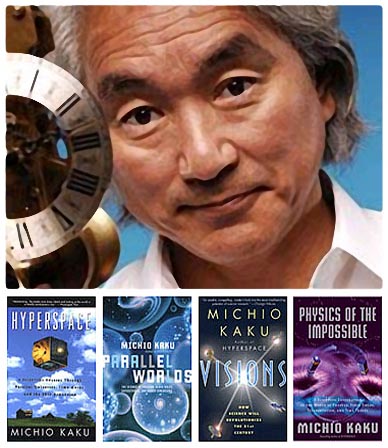
Michio Kaku on the Multiverse ...
Michio Kaku on the Multiverse
Interview with the Conscious Media Network

Subscribe to:
Posts (Atom)